
Your assessment
What to expect when your energy assessor visits
A domestic EPC assessment is quick and non-invasive — usually 30 to 45 minutes. Here’s exactly what the assessor looks at, room by room.
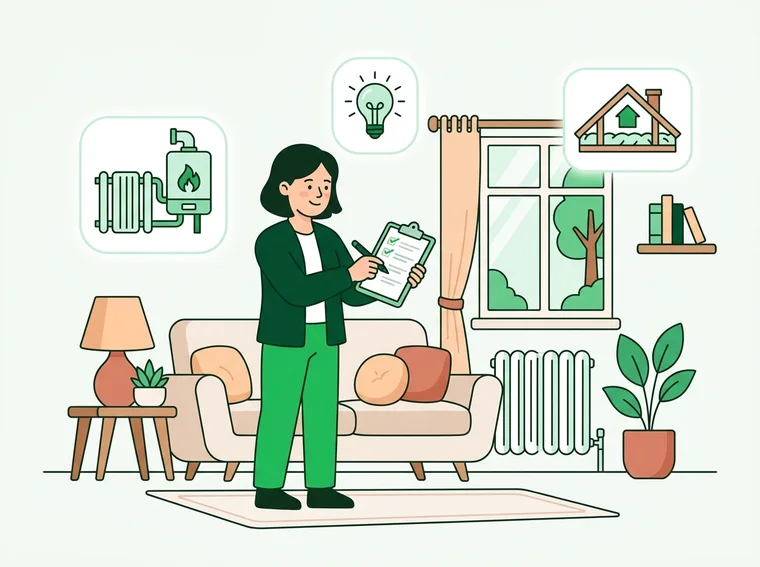
The survey will involve;
- Inspection of meters (gas and electric)
- Inspection of wall construction and any insulation (internal, external or cavity) the assessor will also measure the wall thickness.
- The DEA will need to determine whether the floor is suspended or solid. Documentation will need to be provided to evidence any floor insulation.
- The windows will be assessed. Newer windows will generally have a date stamp on the frame. Draft proofing will also be checked.
- The heating system will require identification, normally a newer combi system will have a GC number which the assessor can use to identify the make and model. The heating controls will also be noted.
- Loft insulation thickness will be measured. If the loft is inaccessible or boards are covering the insulation, documented evidence will need to be produced otherwise the insulation will be assumed.
- Now knowing how the heat arrives (e.g boiler) and how the heat escapes ( floor, wall and roof) the Domestic Energy Assessor will carry out a floor plan to create a model and measure the volume of the property to determine how much space is being heated.
Other things that the assessor will take note of are;
- The number of habitable rooms (e.g. Living Room, Bedroom.
- If the habitable room is heated by a fixed heating source.
- How much of the lighting is energy efficient?
- Bathrooms and showers.
- Conservatories
- Any renewables such as solar panels or wind turbines.
- Secondary heating such as a gas fire
- Any other special features that may be included
Need an EPC?
Find your local accredited assessor, see their price and contact them directly — no middlemen, no commission.
Find your local assessor