
This post contains affiliate links. EPC Near Me has partnered with ESC Learning, and if you book a course through our links we may earn a commission at no extra cost to you. Courses are booked and delivered by ESC Learning.
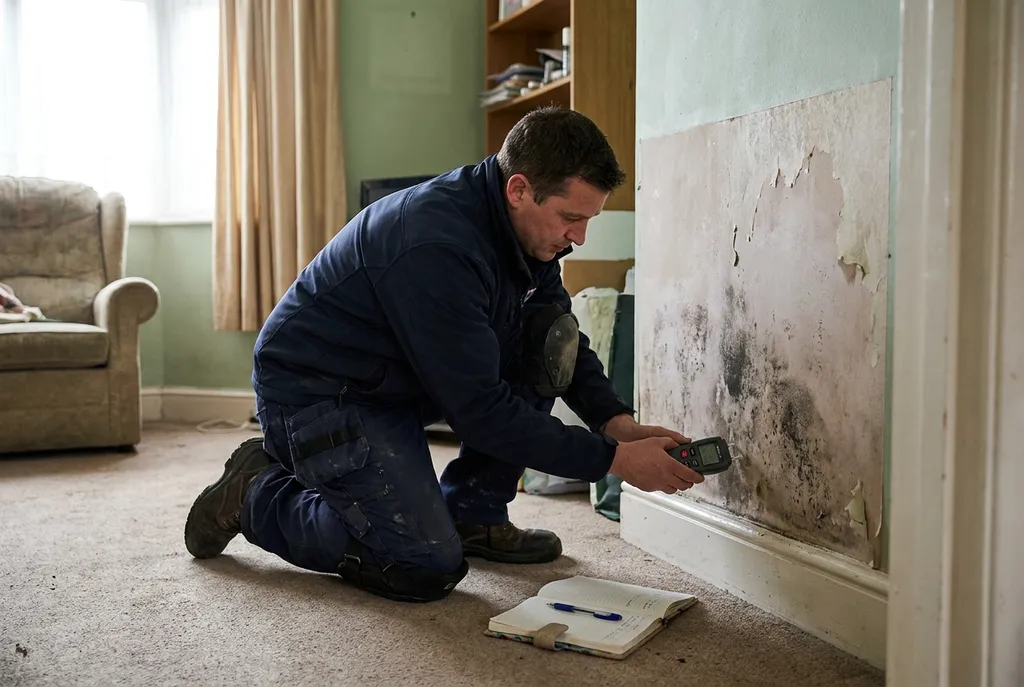
If you carry out EPCs, you already spend your working day looking at exactly the things that cause damp and mould: wall construction, insulation, glazing, heating, ventilation and how a home is actually lived in. More and more landlords, letting agents and homeowners are asking the next question while you are on site. “What do you make of that patch on the bedroom wall?”
Answering it properly is a skill in its own right, and it is one the market is now paying for.
Why damp and mould matters more than ever
Awaab’s Law came into force for social landlords in October 2025. It sets legal timescales for investigating and fixing damp and mould hazards, and the government has said it intends to extend similar duties to private renting. Housing providers and landlords suddenly need investigations that are prompt, evidence-based and properly written up, and they need people who can do them.
At the same time, the push towards EPC C by 2030 means more insulation, more airtightness and more retrofit work. Done badly, that can make condensation and mould worse. Somebody needs to understand the moisture risk before and after the improvements go in.
Why it suits domestic energy assessors
A DEA already has most of the context. You know how to read a building, you record construction types and ventilation for RdSAP, and you are used to explaining findings to people who are not technical. Damp and mould investigation builds on that foundation:
- It adds a higher-value service you can offer the same landlords and agents who already book your EPCs.
- It sits naturally alongside retrofit, where moisture risk is part of every assessment.
- It counts towards your CPD, with accredited hours you can put in front of your scheme.
The ESC Damp and Mould Assessor Pathway
ESC Learning describes itself as the UK’s leading independent provider of damp, mould and retrofit training, and its Damp and Mould Assessor Pathway is designed as one route from awareness to advanced investigation. It is led by Professor John Edwards, a practising building surveyor who has been investigating moisture in buildings since 1981.
The pathway is three courses taken in order:
- Level 1: Basic Awareness (2 hours CPD, on demand). Recognising damp, mould and condensation and knowing when to escalate. Level 1 on its own is £45 + VAT.
- Level 2: your choice of route (7 hours CPD, on demand). Either residential buildings, which most DEAs will want, or traditional and historic buildings if your patch is full of solid-wall homes.
- Level 3: the ABBE Award in Damp, Mould and Condensation in Buildings (15 hours CPD). An Ofqual-regulated qualification covering building pathology, diagnosis, monitoring, reporting and remedial recommendations, taken over two live online days or about 15 hours on demand. More on the Level 3 Award.
Booked together, the pathway is from £695 + VAT, with registration fees on top and flexible payment options. It also includes 12 months of access to the ESC Hub, ESC’s online library of technical guidance, standards and regulatory updates.
See the full pathway and book with ESC Learning →
Thinking about retrofit instead?
If you would rather move towards retrofit, ESC also runs the ABBE Level 3 Certificate for Retrofit Assessors, which requires an existing DEA qualification, and the Level 5 Diploma in Retrofit Coordination for those who want to run PAS 2035 projects. Damp and mould knowledge and retrofit go hand in hand, so many assessors will end up wanting both.
Where to find it
All of the ESC courses we recommend are listed alongside our own CPD in the EPC Near Me CPD store, with a page for each explaining who it suits. Prices are ESC Learning’s and were correct on 12 October 2026, so always check the current price and fees on their site before you book.
Not a member yet? Join the EPC Near Me assessor network to get found by customers in your area — free listings are available.