
Energy Performance Certificates (EPCs) play a crucial role in the UK rental market by assessing a property’s energy efficiency and environmental impact. Every landlord must understand how to improve their property’s EPC rating to comply with legal standards and provide tenants with a comfortable, cost-effective home.
This guide outlines comprehensive EPC rating improvement tips landlords can implement, covering everything from insulation to renewable energy.
Understanding EPC Ratings and Why They Matter For Landlords
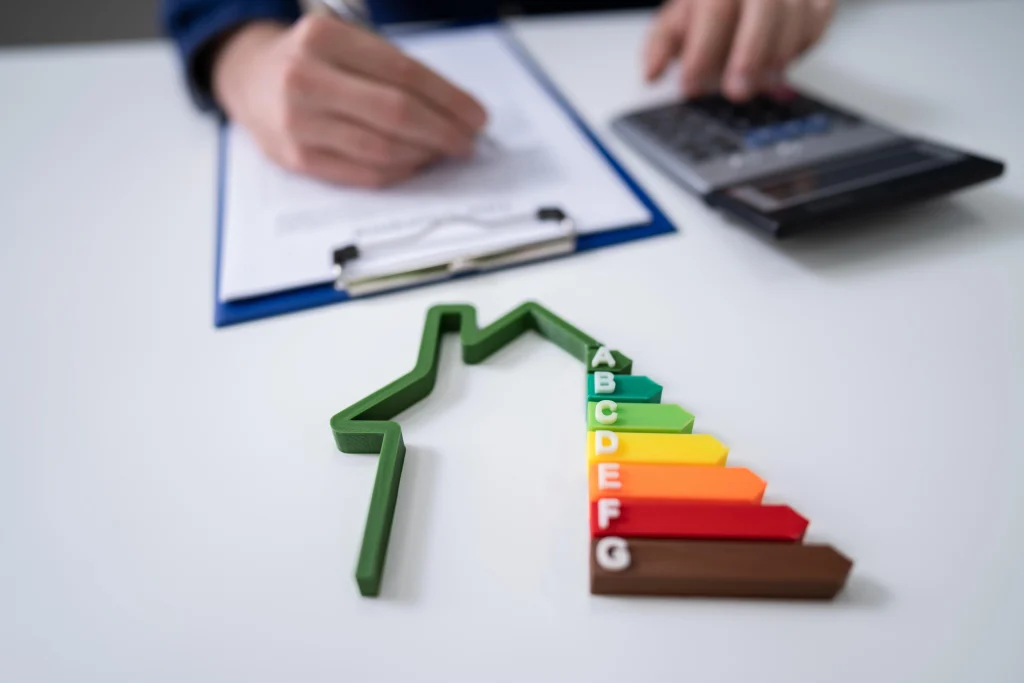
An EPC rating measures how energy-efficient a property is, scored from A (most efficient) to G (least efficient). It factors in heat loss, heating system efficiency, and energy use within the property. Since the UK government aims to reduce carbon emissions and improve energy standards, EPC ratings have become a legal requirement for landlords.
Landlords must currently ensure a minimum rating of E for rental properties, but upcoming legislation demands a minimum of C for new tenancies from April 2025 in England and Wales. This change highlights the urgency for landlords to act proactively.
Improving a property’s EPC rating benefits landlords beyond legal compliance. It enhances tenant comfort by reducing draughts and cold spots, lowers energy bills, and boosts property value. Tenants increasingly prioritise energy-efficient homes to reduce costs and environmental impact, making well-rated properties easier to let.
Legal Requirements and EPC Rating Improvement Tips Landlords Should Follow
Since April 2018, landlords in England and Wales must have an EPC before renting out a property. Failure to provide a valid EPC or renting a property below the minimum rating can result in fines up to £5,000.
The Minimum Energy Efficiency Standards (MEES) regulations are tightening. From April 2025, properties rented out to new tenants must meet at least a C rating, and by 2028, all rented properties should reach this standard. This gradual enforcement gives landlords time but requires immediate planning.
Landlords should regularly check the status of their EPC and upcoming legal changes. Engaging in timely upgrades avoids penalties and future-proofs their investments.
How to Assess Your Property for Effective EPC Rating
A valid EPC report details a property’s current energy efficiency, highlighting weaknesses like poor insulation, inefficient heating, or single glazing. This report serves as a roadmap for improvement.
Landlords might also consider an in-depth energy audit by qualified assessors. This audit involves a detailed inspection of the property’s fabric, heating systems, and appliances, providing tailored recommendations.
Assessment tips include:
- Collect all existing EPC reports for the property.
- Check the age and condition of heating systems and insulation.
- Identify easily accessible areas for quick wins (e.g., loft insulation).
- Understand specific tenant needs that may influence upgrade choices.
Practical EPC Rating Improvement Tips Landlords Can Implement to Boost Energy Efficiency
Insulation-Based EPC Rating Improvement Tips Landlords Should Consider
Insulation is the backbone of energy efficiency and often delivers the most significant improvement for EPC ratings.
- Wall insulation: Around 35% of heat can be lost through uninsulated walls. Most modern homes have cavity walls suitable for insulation with materials like mineral wool or foam. Solid walls, common in older homes, require internal or external insulation, which is more expensive and disruptive but highly effective.
- Loft insulation: Heat rises, making loft insulation critical. The recommended thickness for loft insulation is at least 270mm. Adding or topping up insulation can save up to £300 annually in heating costs.
- Floor insulation: Older properties often have uninsulated floors, causing cold floors and heat loss. Insulating suspended timber floors or solid floors with insulation boards or underfloor heating improves warmth and comfort.
These measures often qualify for government grants, reducing upfront costs.
Heating System Upgrades as Key EPC Rating Improvement Tips For Landlords
Heating accounts for the majority of energy use in homes, so system upgrades can yield considerable EPC improvements.
- Boiler upgrades: Replacing a boiler older than 10-15 years with a modern condensing boiler can improve efficiency by 20-30%. These boilers extract more heat from fuel, reducing waste.
- Heating controls: Installing programmable thermostats allows heating to be set according to occupancy patterns, avoiding unnecessary heating when properties are empty. Smart heating systems can learn usage habits and optimise settings automatically, providing long-term savings.
- Radiator controls: Thermostatic radiator valves (TRVs) enable individual room temperature control, preventing overheating and saving energy.
Regular boiler servicing also maintains efficiency and safety.
Windows and Doors: Essential EPC Rating Improvement Tips Landlords Can Apply
- Double or triple glazing: Single-glazed windows allow significant heat loss. Replacing them with double or triple glazing cuts heat loss by up to 50%, reduces noise, and improves security. Triple glazing is more expensive but offers superior insulation, ideal for colder regions.
- Draught-proofing: Gaps around windows and doors cause cold draughts and increase heating demand. Draught-proofing strips and seals are cost-effective, easy to install, and can save approximately 10% on heating bills.
- Door upgrades: External doors should be well-insulated and fitted tightly to prevent heat escape.
Lighting Upgrades Included in EPC Rating Improvement Tips Landlords Often Overlook
Lighting contributes less to the EPC score than insulation or heating, but remains an important efficiency area.
Switching to LED bulbs reduces electricity consumption by around 80% compared to incandescent bulbs. LEDs have longer lifespans, lowering replacement frequency and waste. Ensuring all lighting in communal areas or inside the property uses LED bulbs is a straightforward upgrade.
Incorporating Renewable Energy as Advanced EPC Rating Improvement Tips Landlords Should Explore
Renewable technologies are increasingly viable and can substantially improve EPC ratings.
- Solar panels: Installing solar photovoltaic (PV) panels generates clean electricity that powers the property, reducing reliance on grid energy and associated carbon emissions. Solar installations can also increase property value and attractiveness.
- Heat pumps: Air source heat pumps (ASHPs) and ground source heat pumps (GSHPs) provide efficient heating by extracting heat from the air or ground. Though installation costs are higher, they deliver low running costs and are eligible for certain government incentives.
Additional EPC Rating Improvement Tips Landlords Can Use
- Smart meters: These devices help tenants and landlords monitor energy use in real-time, encouraging better consumption habits.
- Hot water cylinder insulation: Many properties have hot water cylinders that lose heat to the surrounding areas. Adding an insulating jacket reduces heat loss by up to 50%, improving efficiency.
- Energy-efficient appliances: Replacing old appliances with high-efficiency models (rated A+++ under the EU energy label) reduces electricity consumption, which indirectly supports better EPC ratings.
How Loft and Cavity Wall Insulation Improves Energy Efficiency
Loft and wall insulation are low-cost and high-impact measures. In typical UK homes, they can reduce heat loss by over 25%, lowering heating needs significantly.
- For loft insulation, areas should be checked for damage or gaps, and insulation levels topped up if below the recommended thickness.
- Cavity wall insulation requires a professional survey to assess suitability. Improper installation can cause moisture problems, so certified installers are essential.
Improving insulation also enhances tenant comfort by eliminating cold spots and reducing noise pollution.
EPC Rating Improvement Tips Landlords Should Know About Heating System Upgrades
Efficient heating systems are critical as heating accounts for nearly 60% of a household’s energy consumption.
- Modern condensing boilers typically operate at 90%+ efficiency compared to older models running at 70-75%.
- Smart heating controls and thermostats can reduce heating costs by up to 30% by preventing overheating and adapting to occupant behaviour.
- Timely servicing keeps boilers running safely and efficiently, preventing breakdowns.
Combined heating improvements can raise an EPC rating by one or two bands, depending on the property’s starting point.
How Window and Door Upgrades Help Landlords Improve EPC Ratings
Replacing windows and doors is more costly but yields significant thermal performance benefits.
- Double glazing reduces condensation and heat loss.
- Draught-proofing helps seal leaks at a low cost.
- When replacing doors, choosing insulated composite doors with multi-point locking offers better thermal performance and security.
These upgrades can also improve property aesthetics, aiding rental appeal.
What EPC Rating Improvement Tips Landlords Can Use to Access Funding and Grants
The UK government encourages energy efficiency upgrades through various schemes:
- The Energy Company Obligation (ECO) mandates energy suppliers to fund insulation and heating improvements in eligible properties.
- Many local councils provide grants or interest-free loans to support energy efficiency work.
- Certain materials and installation costs benefit from reduced VAT (5% instead of 20%) for residential energy-saving improvements.
Landlords should research schemes applicable to their property and location to reduce costs.
How Landlords Can Choose the Best Professionals for EPC Rating Improvements
Using certified professionals ensures upgrades meet building regulations and best practices:
- Choose contractors registered with TrustMark or the Microgeneration Certification Scheme (MCS) for renewable tech.
- Verify references and read reviews.
- Obtain multiple quotes to compare pricing and scope.
- Ensure contractors provide a clear timeline and warranty.
Professional installation often qualifies landlords for warranties and grants.
How Landlords’ EPC Improvement Strategies Affect Tenant Demand and Property Value
Improved EPC ratings make properties more attractive to quality tenants seeking affordable, comfortable homes. Tenants increasingly consider energy costs when choosing rentals.
Better-rated properties:
- Are easier and quicker to rent out.
- Can command higher rents due to lower energy bills.
- May experience reduced tenant turnover.
- Potentially increase capital value over time.
These benefits make EPC improvements a sound investment for landlords.
How Landlords Can Improve EPC Ratings by Renewing Their EPC Certificates
After completing energy efficiency upgrades, it is vital to obtain an updated EPC. This new certificate:
- Reflects the improved rating.
- Is required for tenancy agreements and legal compliance.
- Helps landlords document improvements for future sales or lets.
EPCs remain valid for 10 years, but updating after significant works ensures accuracy.
EPC Rating Improvement Mistakes Landlords Must Avoid
- Focusing solely on one upgrade without considering the whole property’s efficiency can limit gains.
- DIY insulation or heating works without expertise can cause damage or fail compliance.
- Ignoring smaller improvements like draught-proofing can miss easy savings.
- Forgetting to renew the EPC after improvements may lead to legal issues.
- Not considering tenant communication about improvements reduces their appreciation of upgrades.
How Emerging Technologies Can Help Landlords Improve EPC Ratings
New technologies are making energy efficiency easier and more effective:
- Smart home systems integrate heating, lighting, and energy monitoring for seamless control.
- Battery storage paired with solar panels allows properties to store excess energy for later use.
- Advanced insulation materials such as aerogels provide higher performance in thinner layers.
These innovations provide landlords with forward-looking solutions to meet increasingly stringent standards.
Conclusion
Improving your property’s EPC rating is essential for legal compliance, tenant satisfaction, and long-term value. Effective EPC rating improvement tips landlords rely on include upgrading insulation, heating systems, windows, and integrating renewable energy where feasible.
EPC Near Me offers expert EPC assessments that help landlords understand which improvements will yield the best results for their specific property. Their professional service guides landlords through the process, ensuring investments are targeted and compliant.
To safeguard your property’s rental eligibility and maximise energy efficiency, book a comprehensive EPC assessment with EPC Near Me today. Taking this step provides a clear improvement plan and helps avoid costly penalties as the regulations tighten.
References:
https://www.gov.uk/selling-a-home/energy-performance-certificates
https://www.gov.uk/guidance/non-domestic-private-rented-property-minimum-energy-efficiency-standard-landlord-guidance
https://assets.publishing.service.gov.uk/media/5a81b046ed915d74e33ff8f1/DECC_factsheet_11.11.16_WALLINSULATION_LOCKED.pdf
You can find your property’s EPC for any property in England and Wales on the official register.